


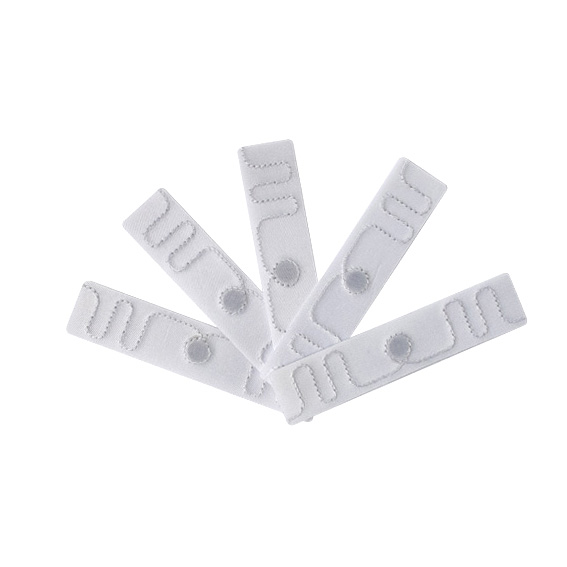



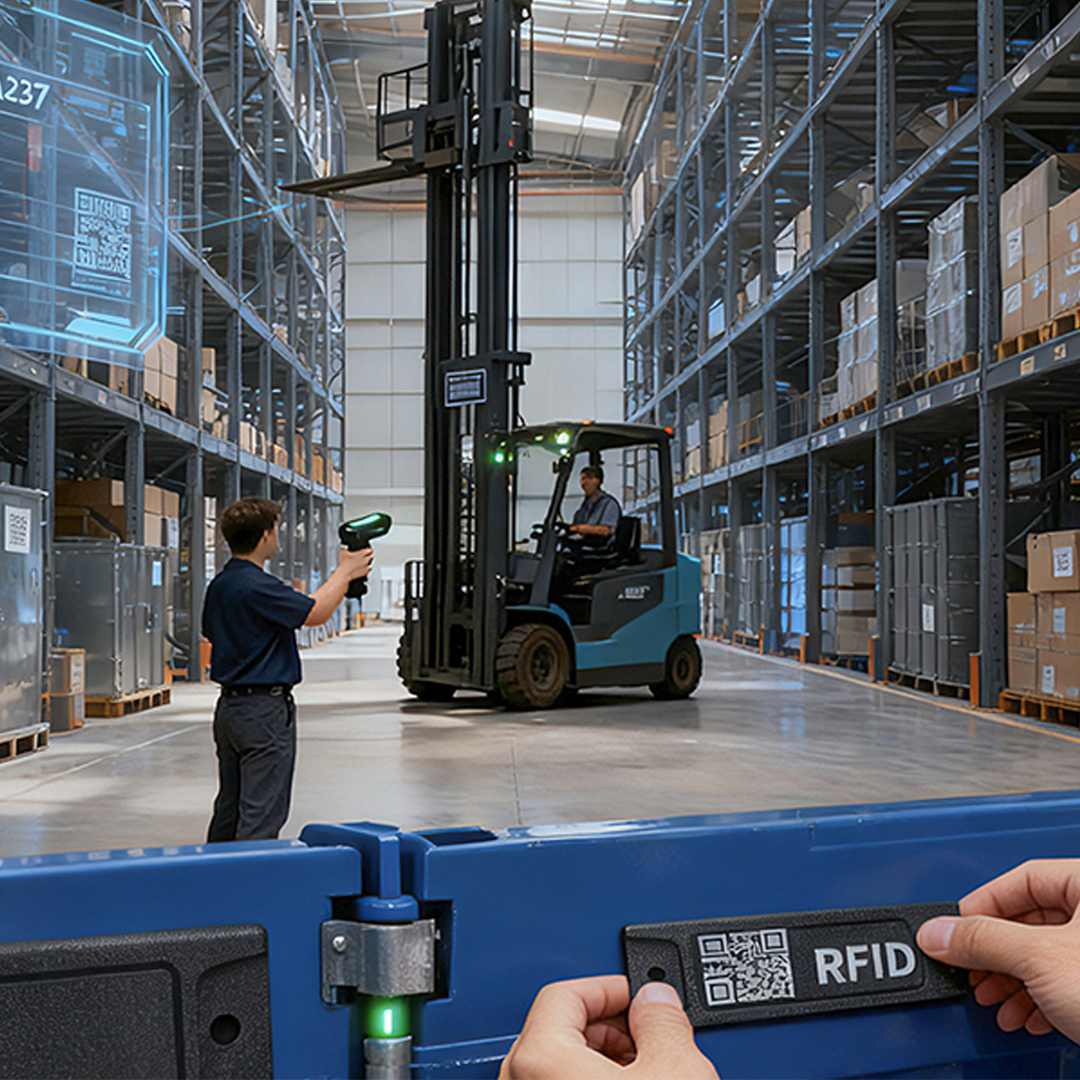


Dimensions (79mm x 31mm): A palm-sized rectangle that provides ample area for printing clear text, barcodes, and QR codes, while also providing optimal performance space for the built-in RFID antenna.
Material (ABS engineering plastic): Acrylonitrile-butadiene-styrene copolymer, a tough, hard engineering plastic with good dimensional stability. It effectively protects internal chips and antennas from impacts, friction, and chemical corrosion.
Core Feature (Anti-metal) :This is the most critical feature. Ordinary RFID tags will fail when attached to metal surfaces because metal interferes with electromagnetic waves. Anti-metal tags use special designs (such as adding a layer of absorbing material) to counteract this interference, ensuring stable operation even on metal surfaces.
Core application scenarios in the warehousing and logistics industry
This label is primarily used to identify and manage metal assets in the warehousing and logistics industry, enabling visualized, traceable, and efficient asset management.
1. The "digital ID card" of warehousing and logistics vehicles
Applications: Metal shelves, metal pallets, bins, cage trolleys, forklifts, etc.
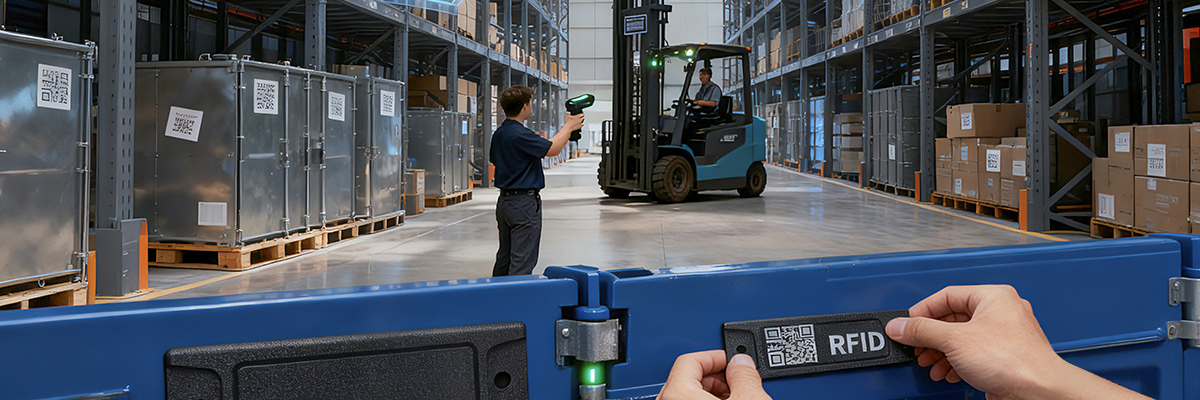
Application method : Securely install the label on a flat, conspicuous location on the metal asset surface using strong adhesive or screw holes (usually pre-drilled). Assign a unique ID to each asset and enter the information (e.g., asset number, type, purchase date, region) into the asset management system.
The value it brings:
Rapid inventory: Staff can walk around the warehouse with RFID readers, quickly and accurately reading the location and status of all shelves and pallets from a distance without visual contact, achieving a full inventory in seconds.
Precise positioning: Combined with fixed readers deployed in the warehouse, the location of mobile assets such as forklifts and cage trucks can be tracked in real time, optimizing scheduling efficiency.
Lifecycle management:Records the entire process of asset activation, maintenance, and disposal, enabling refined cost control and procurement decisions.
2. Intelligent management of containers and transport vehicles
Applications: Shipping containers, metal transport trailers.
Application method:Install this anti-metal tag on the container door or side wall, or on the trailer frame. The tag can contain data such as container number, carrier information, and maximum load capacity.
The value it brings:
Automated gate management: Install RFID reader gates above the entrances and exits of warehouses and ports. When a vehicle or container with a tag passes through, the system can automatically and instantly identify its identity, complete registration, release or task assignment, greatly improve throughput efficiency and reduce queuing and manual operation.
On-site tracking: Within the yard or industrial park, the location of a specific container can be quickly pinpointed, avoiding the problem of "difficulty in finding the container".
3. Work-in-process (WIP) fixture management on the production line
Applications: Metal tooling plates, fixtures, and turnover carts that carry products.
Application method : Install anti-metal tags on these metal rails. When a product is placed on the rail to enter a process, the fixed reader automatically reads the tag ID of the rail, and the system determines that the product has arrived at this station and starts (or completes) the process.
The value it brings:
Transparent production progress: Real-time tracking of the specific location and status of each work order on the production line, enabling visualization of production progress.
Error prevention and traceability: The system ensures products flow through the correct process; if a product is mistakenly placed in the wrong workstation, an alarm will be triggered. Simultaneously, complete flow records provide a data foundation for quality traceability.
Optimize turnover efficiency: By analyzing the turnover data of the track equipment, production bottlenecks can be identified and the production line balance can be optimized.
4. Management of Recyclable Logistics Vehicles (RTIs)
Applications: Metal bins, metal cages, etc.
Application method : Install labels on the side of the bins and associate them with the information of the items inside the bins in the system.
The value it brings:
Efficient circulation and recycling:These expensive vehicles can be quickly inventoried, sorted and recycled at upstream and downstream nodes of the supply chain (such as suppliers, manufacturers and distribution centers), reducing asset loss.
Automated sorting: At the sorting center, RFID readers on the conveyor belt can automatically route bins to the correct exit or production line.
Summarize:
Applying 79mm x 31mm ABS anti-metal tags to the warehousing and logistics industry has ultimately elevated the management from "people and goods management" to "the management of tools and facilities that carry goods." Its core advantages are reflected in:
Unbreakable: ABS material provides physical protection, and its anti-metal properties ensure stable performance in harsh industrial environments.
Ultimate efficiency: Enables contactless, batch, and rapid identification of assets, freeing managers from tedious manual record-keeping and asset retrieval.
Data transparency: It gives digital life to all moving and stationary metal assets, making every key element in warehouses, workshops and storage yards visible, knowable and controllable.
Decision support:Data such as asset utilization rate, turnover rate, and location history provide a scientific basis for optimizing operations and reducing costs.
This label is like giving all the cold metal equipment a "mouth" and "ears," enabling them to communicate with the system, report their status and location, and thus jointly build a highly intelligent and automated modern warehousing and logistics system.






 鄂公网安备42050002420915号
ICP备案:
鄂公网安备42050002420915号
ICP备案: