


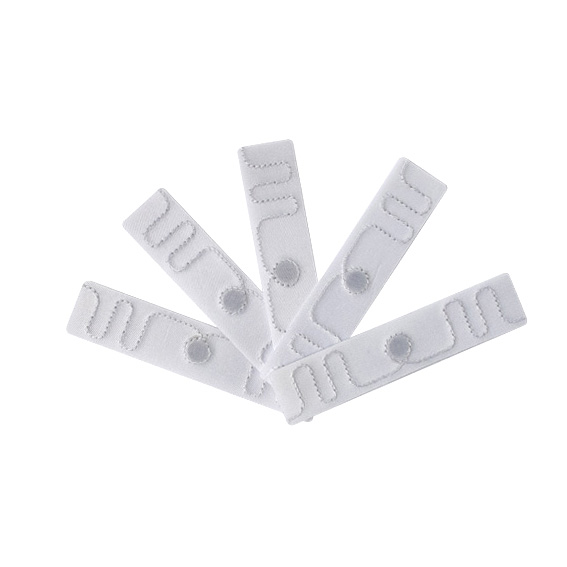






In smart card manufacturing, RFID Inlay is the core functional carrier of finished cards, directly determining identification performance, application scenarios and adaptability. For card manufacturers, high-quality inlays with flexible chip and layout options are key to meeting customized needs in finance, transportation, access control and other industries. This article breaks down RFID inlay core configurations to help manufacturers match production requirements accurately.
I. Core Cognition: Value Positioning of RFID Inlay for Card Manufacturers
RFID Inlay is a modular component encapsulated with chip, antenna and substrate, serving as the core unit for smart cards to realize RFID functions. Card manufacturers produce finished RFID cards by compounding, die-cutting and printing inlays with PVC, PC, paper and other substrates. Its quality directly affects the reading distance, stability and service life of finished cards, while flexible configurations enable quick response to personalized industrial needs, boosting production efficiency and competitiveness.
High-quality RFID inlays must meet three core requirements: precise antenna impedance-chip matching, tight moisture/damage-resistant encapsulation, and substrate compatibility with subsequent printing and compounding. These are the key criteria for manufacturers to select inlays.
II. Chip Selection: Multi-frequency Coverage for Full-scenario Needs
RFID inlays offer four chip options: LF, HF, UHF and dual-frequency. Performance differences across frequency bands adapt to diverse finished card scenarios, enabling manufacturers to select precisely based on customer needs:
• Low Frequency (LF) Chips: Operating at 125kHz/134.2kHz, cost-effective with strong penetration (through liquids/metals) but short reading distance (≤60cm). Suitable for access control, time attendance and animal identification cards, complying with ISO 11784/11785.
• High Frequency (HF) Chips: Operating at 13.56MHz, with fast speed (106kbit/s), multi-tag identification support, 1cm-1m reading distance and moderate anti-interference. Widely used for bus, bank and campus cards, compatible with ISO 14443/15693 for payment and authentication.
• Ultra-high Frequency (UHF) Chips: Operating at 860-960MHz, with long distance (1-10m), high speed (≤50m/s) and large storage, suitable for high-speed scenarios. For logistics, warehouse and highway toll cards; anti-metal treatment required during encapsulation (ISO 18000-6).
• Dual-frequency Chips: Integrating two bands (usually HF+UHF), combining their advantages for scenario switching. E.g., short-distance payment via HF and long-distance inventory via UHF, suitable for high-end access control and smart retail.

III. Layout Specifications: Standard Sizes for Flexible Customization
RFID inlays provide layouts like 2*5, 3*7, 3*8, 4*5 (inches) for finished card production. Layouts determine inlay quantity/layout on a substrate, affecting production efficiency and material utilization:
• 2*5 Layout: 10 inlays per substrate, compact for small cards/mass production, improving material utilization and reducing unit cost (access control, key fob cards).
• 3*7 Layout: 21 inlays per substrate, universal for standard 85.5*54mm cards, compatible with most equipment (all-in-one, bus cards).
• 3*8 Layout: 24 inlays per substrate, more compact than 3*7 for cost-sensitive large batches, requiring high-precision die-cutting (mass access control/time attendance cards).
• 4*5 Layout: 20 larger inlays per substrate, for high-capacity chips/antennas, suitable for long-distance/UHF logistics and industrial management cards.
Manufacturers select layouts based on card size, order volume and equipment. Some suppliers offer customized layouts for special card production.
IV. Application Value and Production Precautions for Card Manufacturers
1. Core Application Value
Flexible chips and layouts enable "one inlay for multiple products": HF+3*7 for finance/transport; UHF+4*5 for logistics/warehousing; dual-frequency+special layouts for niche needs. Standardized inlays shorten cycles, improve yield and cut costs.
2. Production Adaptation Points
Two production notes: Adjust printing process by chip frequency to avoid conductive ink interfering with signals; control compounding temperature/pressure to protect encapsulation. Choose ROHS/REACH-certified inlays for compliance.
V. Summary: Inlays Empower the Intelligent Upgrade of Card Manufacturers
As the core of finished cards, RFID inlay flexibility in chips and layouts determines manufacturers' market coverage and competitiveness. Multi-frequency and customizable layouts help break production limits, meeting needs from basic access control to high-end smart cards, driving industry upgrading.






 鄂公网安备42050002420915号
ICP备案:
鄂公网安备42050002420915号
ICP备案: